








Empowering Anticipatory
Climate Action

We are building the first end-to-end anticipatory climate impact management platform that turns data into actions to protect lives, livelihoods and assets

a spin-off company of

Scroll to Explore

OPAL is a modular SaaS platform for anticipatory and participatory climate action. Combining climate science, AI, data engineering with human expertise and local knowledge, it empowers companies, communities and countries to reduce climate impacts across the full climate risk cycle from Observe and Plan to Act and Learn.

Observe
Plan
Act
Learn

Supported by:

Floods are no longer isolated disasters. They represent a growing global systemic risk.

Global annual direct flood damages

already exceed

0

Billion

(Ciwem)

0 %

of people globally affected by

flooding live in low – and middle-income countries.

(Rentschler et al. 2022)

Since 1980, floods have caused more than

$ 0

trillion in economic losses worldwide

(World Resources Institute)

0

disasters triggered by flooding 

were recorded in 2024, making them the second most common cause of disasters after storms.

(CRED 2024)

Companies, communities, and countries are not prepared to face future climate impacts

The frequency, magnitude and complexity of climate events, such as floods, droughts, heatwaves and storms, will grow significantly in the years and decades ahead. Floods have cost $325 billion between 2020 and 2024. 1,81 billion people worldwide are exposed to flood risk.

Globally, most responses remain reactive, fragmented, and disconnected from local contexts, leaving institutions struggling to anticipate future risks and protect what is most valuable and vulnerable. Particularly costly is the ”decision gap”, where insights and warnings do not lead to appropriate actions.

Our solution: OPAL, the end-to-end anticipatory climate action platform

OPAL is an end-to-end platform designed to empower anticipatory action across the full disaster risk lifecycle. Building on the pioneering work of Data-Pop Alliance, we are starting with floods, helping public and private organisations anticipate, prepare and lower their impacts.

Through a place-centric approach, OPAL provides locally relevant insights and tools that enable institutions to plan and act with greater speed and coordination, reducing losses and strengthening resilience over time.

“...investing in disaster risk reduction saves money, saves lives, and lays the foundation for a safe and prosperous future for us all. I urge all leaders to heed that call.”

OPAL: The End-to-End AI
Platform for Anticipatory Climate Action

While many solutions address specific parts of the chain risk, OPAL’s 4 modules cover the entire lifecycle of climate impact management.

How OPAL Works :

Sectors

We serve public and private sector clients facing climate risks that threaten their operational, financial, and societal goals.

Financial services
and fintech

Insurance and risk management

Supply chain
& agrobusiness

Telecommunications

Other climate-exposed industries

National governments

Local authorities
& municipalities

Disaster risk
management agencies

Public sector &
state-owned companies

Humanitarian organizations
& NGOs

International organizations
& development partners

Research & Development
institutions / Think tanks

With OPALimpact, our clients turn climate risk insights into effective interventions and investments ahead of impacts at
  • Understand their exposure to flood risk across territories and populations

  • Identify vulnerable communities and prioritize areas of intervention

  • Make faster, better-informed decisions before and during climate events

  • Coordinate stakeholders around a shared operational picture

  • Deliver timely and targeted support to affected populations

  • Learn from each event to strengthen future climate preparedness and resilience

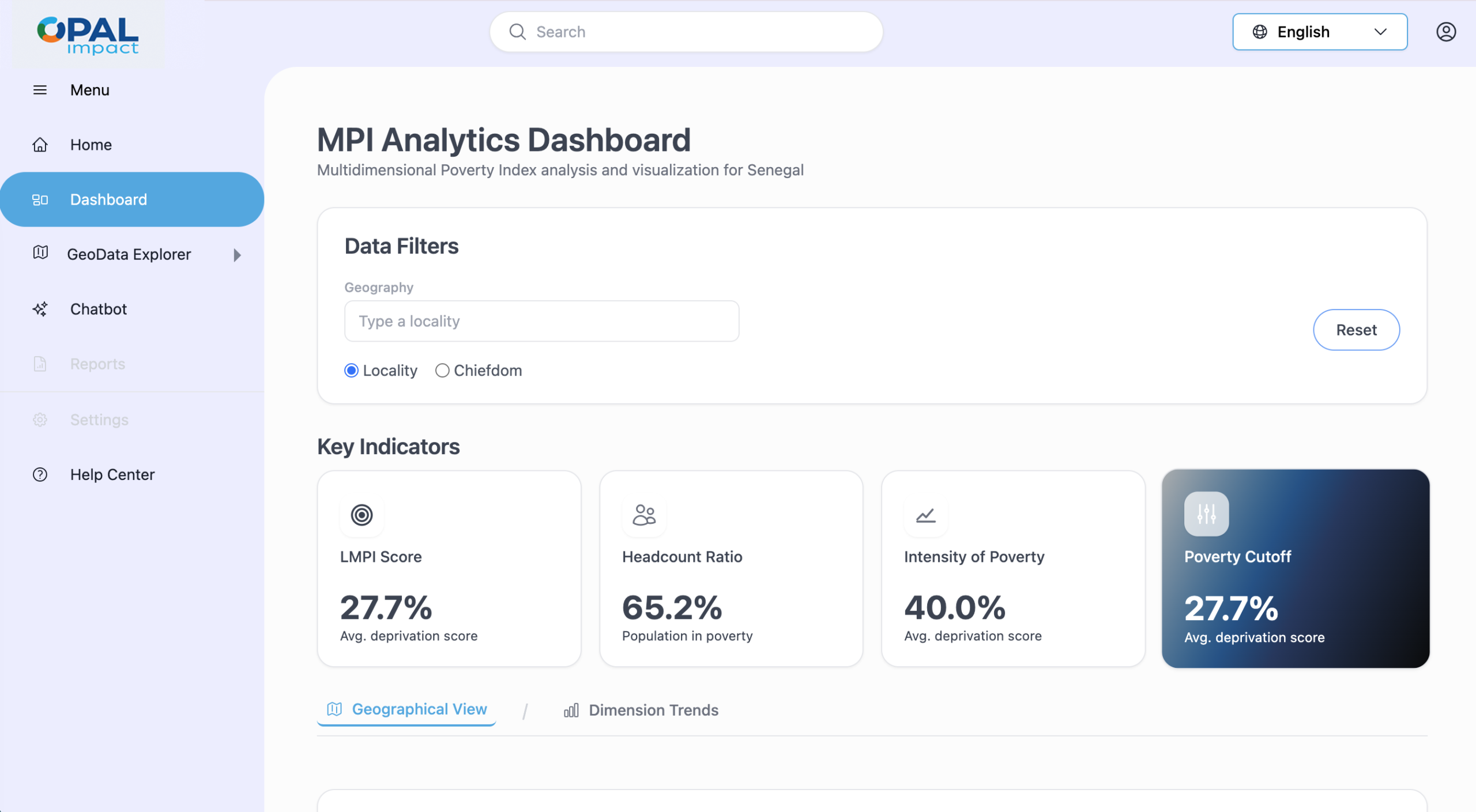
OPAL Deployment with Mercy Corps in Senegal

OPAL, incubated by Data-Pop Alliance (DPA), won the 2025 Mercy Corps Ventures’ Anticipatory Action Accelerator out of 230 applications from more than 50 countries worldwide for its AI-powered, community-driven approach to early flood action. The pilot will serve as a replicable foundation for expansion across flood-prone regions in West Africa and beyond. This work also benefited from support from the World Food Programme Innovation Accelerator and the Patrick J. McGovern Foundation.

Senegal faces recurrent and devastating floods, displacing tens of thousands of people, 56 000 in October 2024 alone. While risk data exists, responses remain reactive due to fragmented information, late warnings, and the absence of mechanisms to release funding before disasters strike.
Flooding in Dakar

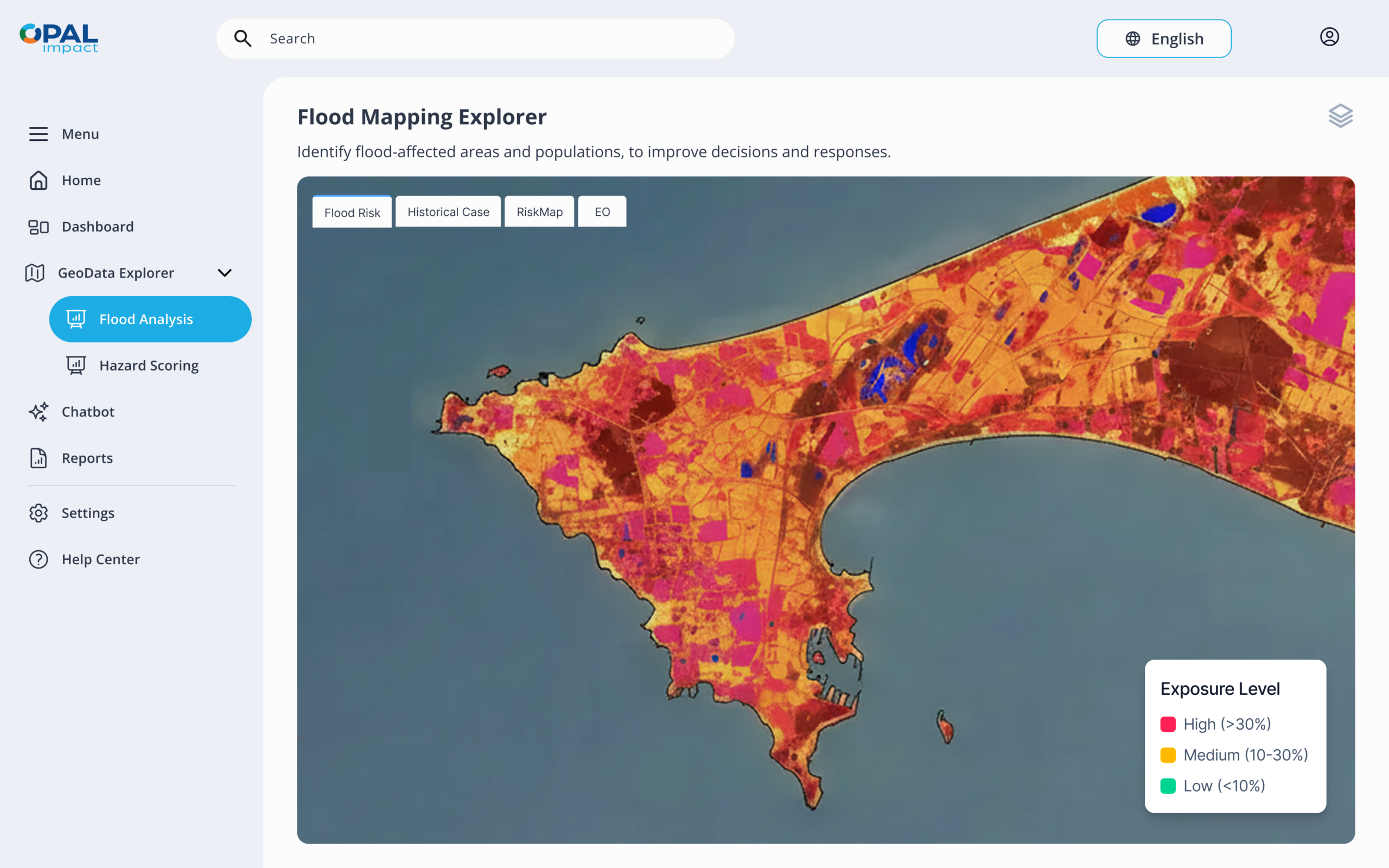
OPAL is an end-to-end anticipatory action platform that connects risk intelligence to immediate action.

Using AI-powered analysis of high-resolution satellite data thanks to our partner Wasdi, OPAL assesses flood risk severity in real time.
LLM-based decision support transforms complex data into clear recommendations, while blockchain smart contracts automatically trigger anticipatory cash transfers when risk
thresholds are reached.

At the community level, personalized voice alerts in local languages, delivered through Jokalante’s network of 200,000+ users, ensure information and resources reach households before floodwaters rise.
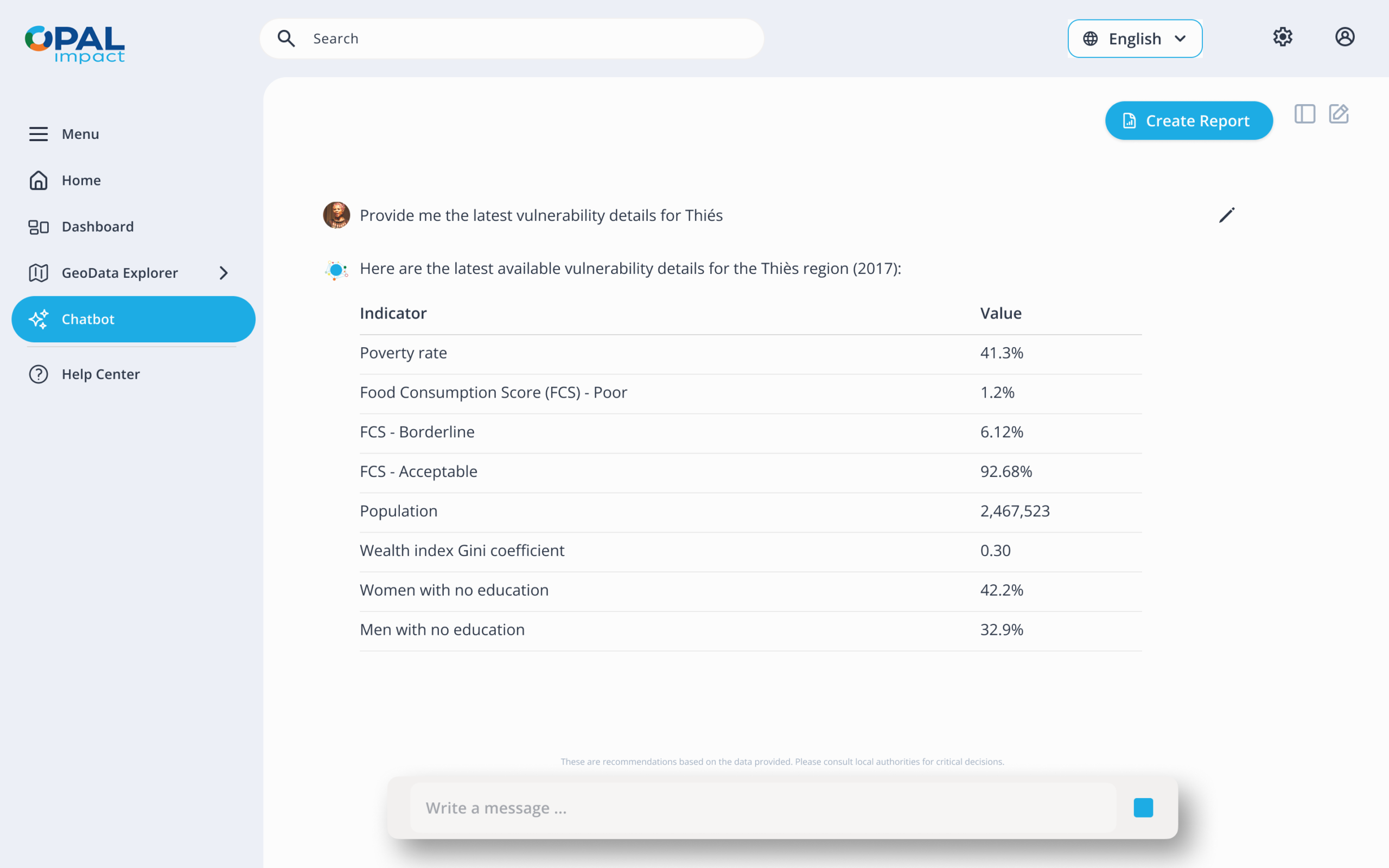

OPAL enables faster, more effective flood response at scale:
  • Significantly improved flood forecasting accuracy
  • Drastically reduced aid delivery time and operational costs
  • Highly reliable delivery of early warnings and anticipatory cash transfers
  • Strong beneficiary trust and satisfaction
About us & team

OPALimpact builds on 13 years of applied research and over 200 projects in more than 30 countries developed by Data-Pop Alliance, a non-profit organization created in 2013 with the Harvard Humanitarian Initiative and MIT Media Lab.

Our team is multidisciplinary, diverse, and field-oriented, combining climate, data, policy, and operational expertise to support institutions facing growing climate risks.
OPALimpact builds on 13 years of applied research and over 200 projects in more than 30 countries developed by Data-Pop Alliance, a non-profit organization created in 2013 with the Harvard Humanitarian Initiative and MIT Media Lab.

Our team is multidisciplinary, diverse, and field-oriented, combining climate, data, policy, and operational expertise to support institutions facing growing climate risks.

Emmanuel Letouzé-Lallinec, PhD

CEO

Zinnya del Villar

Data & Technology

Nicolas de Cordes

Strategy & Finance

Angeles Navarro Rueda

Sales

Andrés Lozano

Customer Success

Get in touch!

If you are a potential user, partner or investor, contact us and let our team tell your more about OPAL. 

Scroll to Top